Fashion Blog by Apparel Search is all about style trends, fashion designers, fabulous boutiques, clothing, shoes, accessories and beauty products. Not to mention everything about the apparel industry & textiles. Fashion blog posts info about fashion industry news, celebrities, red carpet events, fashion week and clothes, footwear and cosmetics. Fashion news and style tips for fashionistas who enjoy researching style. If you work in the garment industry this is the perfect blog for you.
Welcome to the Fashion Blog
Are you interested in reading fashion news about haute couture, prêt-à-porter and avant-garde clothing? We hope so because you will learn about these topics as well as find style reports about emerging designers, new lifestyle brands, cutting edge fabrics, and much more. Anything relevant to the fashion industry is open for discussion.
Enjoy the fashion blog to obtain your daily dose of inspiration. Keep your wardrobe as trendy as your mind.
Read more about fashion & style.
Home » Posts filed under apparel
Friday, September 1, 2023
Cricket Attire From the Pavilion to the Runway
Thursday, February 3, 2022
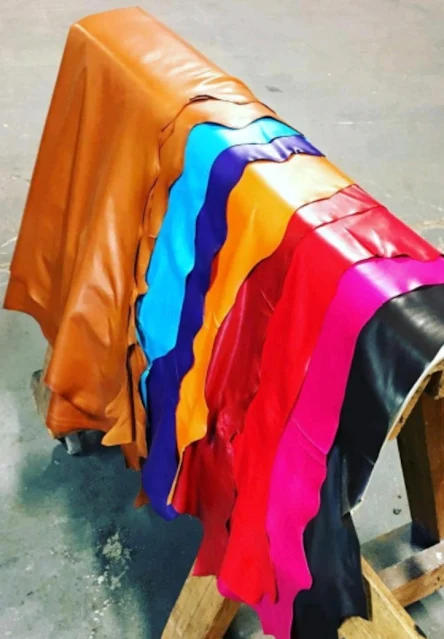
Leather Upgrade with Remarkable Innovations
In the 21st Century, leather is trendy in fashion. However, this modern fabric cannot be decently sanitized. Dutch company, Undercolor B.V, is launching Executive Grade's latest leather innovation in partnership with one of the leading tanneries in India. The only leather approved for automatic machine wash with detergent at temperatures up to 40 degrees Celsius / 104 Fahrenheit, does not require maintenance, holds extra features, and comes with a three-year warranty.
Leather Upgrade with Remarkable Innovations
In the 21st Century, leather is trendy in fashion. However, this modern fabric cannot be decently sanitized. Dutch company, Undercolor B.V, is launching Executive Grade's latest leather innovation in partnership with one of the leading tanneries in India. The only leather approved for automatic machine wash with detergent at temperatures up to 40 degrees Celsius / 104 Fahrenheit, does not require maintenance, holds extra features, and comes with a three-year warranty.
Leather Upgrade with Remarkable Innovations
In the 21st Century, leather is trendy in fashion. However, this modern fabric cannot be decently sanitized. Dutch company, Undercolor B.V, is launching Executive Grade's latest leather innovation in partnership with one of the leading tanneries in India. The only leather approved for automatic machine wash with detergent at temperatures up to 40 degrees Celsius / 104 Fahrenheit, does not require maintenance, holds extra features, and comes with a three-year warranty.
Leather Upgrade with Remarkable Innovations
In the 21st Century, leather is trendy in fashion. However, this modern fabric cannot be decently sanitized. Dutch company, Undercolor B.V, is launching Executive Grade's latest leather innovation in partnership with one of the leading tanneries in India. The only leather approved for automatic machine wash with detergent at temperatures up to 40 degrees Celsius / 104 Fahrenheit, does not require maintenance, holds extra features, and comes with a three-year warranty.
Saturday, November 24, 2018
Apparel Wholesalers
What are apparel wholesalers? Wholesale is the selling of goods in large quantities to be retailed by others.
Learn about apparel wholesalers.
The companies found will be a mix of traditional fashion distributors as well as modern online fashion wholesale marketplaces that connects manufacturers and brands to retail buyers. It will be rather easy for you to locate the latest wholesale women's clothing, wholesale men's clothing, wholesale kids clothing, wholesale shoes, and wholesale accessories such as wholesale jewelry, wholesale sunglasses, and wholesale handbags.
Friday, February 2, 2018
Golf Le Fleur
Friday, November 4, 2016
Patternmaking for Clothing
A patternmaker is a person who makes patterns for the manufacturing of clothing.
In sewing and fashion design, a pattern is the template from which the parts of a garment are traced onto fabric before being cut out and assembled. Patterns are usually made of paper, and are sometimes made of sturdier materials like paperboard or cardboard if they need to be more robust to withstand repeated use. The process of making or cutting patterns is sometimes condensed to the one-word Patternmaking but it can also be written pattern making or pattern cutting.
Patterns may be drafted on paper or in a computer program designed for patternmaking. Their are currently a wide variety of software options available. Most of the time, in modern American samplerooms, the patternmaker pulls an existing pattern (or block) and makes a modified copy of it to match the new style, either on paper or on computer. If it's a completely new style, the patternmaker will usually drape a rough draft in muslin fabric on a dress form, then show it to the designer to discuss any changes before transferring the markings to paper to create the pattern for cutting. Patterns may also be drafted from measurements, but this method has fallen out of use, as it's less accurate and takes longer than the other methods. Patternmakers are also asked to copy existing garments without damaging them.
Patternmakers have a combination of engineering and design skill. They need to be able to understand what the designer wants, and translate that into the lines of a pattern that will cause the garment to fit correctly. Ideally the pattern captures not only the fit, but also the flair intended by the designer. They have to have a high level of understanding regarding fabrics, sewing, and other aspects of garment manufacturing.
A patternmaker typically employs one of two methods to create a pattern.
The flat-pattern method is where the entire pattern is drafted on a flat surface from measurements, using rulers, curves and straight-edges. A pattern maker would also use various tools such as a notcher, drill and awl to mark the pattern. Usually, flat patterning begins with the creation of a sloper or block pattern, a simple, fitted garment made to the wearer's measurements. For women, this will usually be a jewel-neck bodice and narrow skirt, and for men an upper sloper and a pants sloper. The final sloper pattern is usually made of cardboard or paperboard, without seam allowances or style details (thicker paper or cardboard allows repeated tracing and pattern development from the original sloper). Once the shape of the sloper has been refined by making a series of mock-up garments called toiles (UK) or muslins (US), the final sloper can be used in turn to create patterns for many styles of garments with varying necklines, sleeves, dart placements, and so on. The flat pattern drafting method is the most commonly used method in menswear; menswear rarely involves draping.
The draping method involves creating a muslin mock-up pattern by pinning fabric directly on a form, then transferring the muslin outline and markings onto a paper pattern or using the muslin as the pattern itself.
A sloper pattern (home sewing) or block pattern (industrial production) is a custom-fitted, basic pattern from which patterns for many different styles can be developed. The process of changing the size of a finished pattern is called grading. Maybe we will discuss the grading of patterns on a future article. In bespoke clothing, slopers and patterns must be developed for each client, while for commercial production, patterns will be made to fit several standard body sizes.
Although a sewer may choose to use a standard size that has been pre-graded on a purchased pattern, they may decide to tailor a pattern to better fit the garment wearer. Creating a sewer's muslin, similar to a garment template, is one method of fitting. Muslin material is inexpensive and is easy to work with when making quick adjustments by pinning the fabric around the wearer or a dress form. The sewer cuts muslin pieces using the same method that they will use for the actual garment, according to a pattern. The muslin pieces are then fit together and darts and other adjustments are made. This provides the sewer with measurements to use as a guideline for marking the pattern pieces and cutting the fabric for the finished garment.
After a paper/fabric pattern is completed, very often pattern-makers digitize their patterns for archiving and vendor communication purposes. The previous standard for digitizing was the digitizing tablet. Nowadays, automatic option such as scanner and cameras systems are available.
You may want to also view our Pattern making services in NYC blog post. Also, be sure to vising the patternmaking section here on Apparel Search to find patternmaking software, consulting services, books, etc.
Thank you for taking the time to read our fashion industry blog post. If you are interested, you can browse our site for additional pattern making information.
We hope that you have found this news to be informative. If you have comments or questions, please add your thoughts in the discussion area below.
Monday, March 7, 2016
Apparel Fixes Everything
Wednesday, March 2, 2016
American Apparel Ad Campaign Technique
You may also find our supermodels sun bathing post of interest. That is a real "behind" the scenes look at fashion models.
Monday, February 8, 2016
Pattern Making Services NYC
You may also want to read our patternmaking blog post if you are not sure what patternmaking means.
Thank you for taking the time to read our apparel industry blog post. We hope that you have found this news to be informative. You may also have interest in reading our fashion design tools blog post.
If you have comments or questions, please add your thoughts in the discussion area below.
Tuesday, November 3, 2015
Reduce The Amount of Static Cling Clothing Generates
- A great tool to get rid of static cling is the Downy Wrinkle Releaser Plus spray. It has over 101 uses and one of them is eliminating static cling. Not only will you remove static charges from your clothes but they will be left with a fresh scent.
- Place a safety pin on the inner hem of clothing to dispel any static charge, instead of shocking you, the charge will go to the pin.
- Place a damp towel or cloth inside dryer and dry at lowest heat setting. The clothing will not become as dry and susceptible to static.
- Take clothes out of the dryer before they are completely dry, allowing them to air dry the rest of the way will better prevent static, due to the reduction of heat and friction between clothing.
- Instead of wearing rubber-soled shoes, wear leather-soled shoes to help prevent static because it is a non-conducting material.
- Use Aluminum foil balls in the dryer, the foil will pick up any charge from the clothing while in the dryer.
- Spray fine mist of distilled water on clothing after it comes out of the dryer, it will kill any static that is clinging to the clothing.
- Slip clothes with static charge through a metal hanger, just like the safety pin and aluminum foil, the metal hanger will pick up any charge that is in your clothing.
- If you have static cling on clothes you are already wearing, place a think layer of moisturizing lotion on your skin underneath your clothes. The moisture from the lotion will counteract the dryness of the clothing.
Thank you for taking the time to read this clothing relevant blog post here on Apparel Search.
Next time you wash your clothing, make softness simpler with the Downy Ball—the easier and more convenient way to add fabric softener to your wash. Just pour your favorite Downy fabric softener into the ball, seal it, and drop it in. The ball then automatically releases fabric softener during the rinse cycle.
We hope that you have found this news about reducing static from your clothes to be informative. If you have comments or questions, please add your thoughts in the discussion area below.
Reduce The Amount of Static Cling Clothing Generates
- A great tool to get rid of static cling is the Downy Wrinkle Releaser Plus spray. It has over 101 uses and one of them is eliminating static cling. Not only will you remove static charges from your clothes but they will be left with a fresh scent.
- Place a safety pin on the inner hem of clothing to dispel any static charge, instead of shocking you, the charge will go to the pin.
- Place a damp towel or cloth inside dryer and dry at lowest heat setting. The clothing will not become as dry and susceptible to static.
- Take clothes out of the dryer before they are completely dry, allowing them to air dry the rest of the way will better prevent static, due to the reduction of heat and friction between clothing.
- Instead of wearing rubber-soled shoes, wear leather-soled shoes to help prevent static because it is a non-conducting material.
- Use Aluminum foil balls in the dryer, the foil will pick up any charge from the clothing while in the dryer.
- Spray fine mist of distilled water on clothing after it comes out of the dryer, it will kill any static that is clinging to the clothing.
- Slip clothes with static charge through a metal hanger, just like the safety pin and aluminum foil, the metal hanger will pick up any charge that is in your clothing.
- If you have static cling on clothes you are already wearing, place a think layer of moisturizing lotion on your skin underneath your clothes. The moisture from the lotion will counteract the dryness of the clothing.
Thank you for taking the time to read this clothing relevant blog post here on Apparel Search.
Next time you wash your clothing, make softness simpler with the Downy Ball—the easier and more convenient way to add fabric softener to your wash. Just pour your favorite Downy fabric softener into the ball, seal it, and drop it in. The ball then automatically releases fabric softener during the rinse cycle.
We hope that you have found this news about reducing static from your clothes to be informative. If you have comments or questions, please add your thoughts in the discussion area below.
Reduce The Amount of Static Cling Clothing Generates
- A great tool to get rid of static cling is the Downy Wrinkle Releaser Plus spray. It has over 101 uses and one of them is eliminating static cling. Not only will you remove static charges from your clothes but they will be left with a fresh scent.
- Place a safety pin on the inner hem of clothing to dispel any static charge, instead of shocking you, the charge will go to the pin.
- Place a damp towel or cloth inside dryer and dry at lowest heat setting. The clothing will not become as dry and susceptible to static.
- Take clothes out of the dryer before they are completely dry, allowing them to air dry the rest of the way will better prevent static, due to the reduction of heat and friction between clothing.
- Instead of wearing rubber-soled shoes, wear leather-soled shoes to help prevent static because it is a non-conducting material.
- Use Aluminum foil balls in the dryer, the foil will pick up any charge from the clothing while in the dryer.
- Spray fine mist of distilled water on clothing after it comes out of the dryer, it will kill any static that is clinging to the clothing.
- Slip clothes with static charge through a metal hanger, just like the safety pin and aluminum foil, the metal hanger will pick up any charge that is in your clothing.
- If you have static cling on clothes you are already wearing, place a think layer of moisturizing lotion on your skin underneath your clothes. The moisture from the lotion will counteract the dryness of the clothing.
Thank you for taking the time to read this clothing relevant blog post here on Apparel Search.
Next time you wash your clothing, make softness simpler with the Downy Ball—the easier and more convenient way to add fabric softener to your wash. Just pour your favorite Downy fabric softener into the ball, seal it, and drop it in. The ball then automatically releases fabric softener during the rinse cycle.
We hope that you have found this news about reducing static from your clothes to be informative. If you have comments or questions, please add your thoughts in the discussion area below.
Reduce The Amount of Static Cling Clothing Generates
- A great tool to get rid of static cling is the Downy Wrinkle Releaser Plus spray. It has over 101 uses and one of them is eliminating static cling. Not only will you remove static charges from your clothes but they will be left with a fresh scent.
- Place a safety pin on the inner hem of clothing to dispel any static charge, instead of shocking you, the charge will go to the pin.
- Place a damp towel or cloth inside dryer and dry at lowest heat setting. The clothing will not become as dry and susceptible to static.
- Take clothes out of the dryer before they are completely dry, allowing them to air dry the rest of the way will better prevent static, due to the reduction of heat and friction between clothing.
- Instead of wearing rubber-soled shoes, wear leather-soled shoes to help prevent static because it is a non-conducting material.
- Use Aluminum foil balls in the dryer, the foil will pick up any charge from the clothing while in the dryer.
- Spray fine mist of distilled water on clothing after it comes out of the dryer, it will kill any static that is clinging to the clothing.
- Slip clothes with static charge through a metal hanger, just like the safety pin and aluminum foil, the metal hanger will pick up any charge that is in your clothing.
- If you have static cling on clothes you are already wearing, place a think layer of moisturizing lotion on your skin underneath your clothes. The moisture from the lotion will counteract the dryness of the clothing.
Thank you for taking the time to read this clothing relevant blog post here on Apparel Search.
Next time you wash your clothing, make softness simpler with the Downy Ball—the easier and more convenient way to add fabric softener to your wash. Just pour your favorite Downy fabric softener into the ball, seal it, and drop it in. The ball then automatically releases fabric softener during the rinse cycle.
We hope that you have found this news about reducing static from your clothes to be informative. If you have comments or questions, please add your thoughts in the discussion area below.
Tuesday, October 6, 2015
Thermoregulation Technology in Nike Apparel
For those of you that are like me and not scientists, here is a brief summary. “Thermo” is anything temperature related; “regulation,” is the act of regulating. If we combine the two words to create thermoregulation it now describes what happens when the temperature around an organism changes and the organism responds to that change, with the goal of maintaining the same core temperature.
According to Barry Spiering the director of applied apparel research from the Explore Team Sport Research Lab at Nike, “Essentially, thermoregulation is the body’s version of a house’s central heating and cooling system”. He explains that when the thermostat is set to a certain temperature, let’s say 72 degrees, the heating and cooling system will continuously work to keep that tempature in the house. If it is cold outside, the system may need to add some extra heat. If it is hot outside, it may need to work to cool the inside house temperature. Regardless of what’s going on outside, the system aims to keep the house at a cool, comfortable 72 degrees.
Similar to the houses system, our body does everything it can to keep us at an optimal temperature. If we get too hot, our body will supply sweat to help cool us down. The sweat is our body’s coolant system. As sweat evaporates, it removes body heat. Conversely, when it’s cold your body generates heat through involuntary movement such as shivering. Without our instruction, our body typically knows what needs to be done and acts accordingly.
Athletes experience thermoregulation typically as they train. This has it’s pluses and minus (pros & cons). On the negative side, as your body is reacting to regulate your temperature it can potentially divert energy (or resources) from one area of your body to another. The harder the body strives to stay cool, the more difficult it becomes to perform at the most optimal levels.
Nike is helping athletes focus on performance by evolving something that can support the body’s natural thermoregulation process: whatever it’s wearing.
The Nike Explore Team Sport Research Lab — comprised of top physiologists, biomechanists, and perception scientists — is dedicated to this goal. It employs cutting-edge technology, such as environmental chambers that simulate the temperature and humidity of competition locations worldwide, and works with athletes of all levels to test materials and corresponding body temperature in different climates at various levels of exertion.
Believe it or not, they even have a walking and sweating thermal manikin named Hal. This super manikin Hal helps measure everything from thermal resistance (apparel’s ability to insulate against heat loss) to evaporative resistance (apparel’s ability to allow sweat to evaporate). In addition to using Hal, Nike also uses real athletes to help test new clothing.
Recent achievements include Nike AeroReact. AeroReact isn’t just a fabric; it’s a wearable technology that can sense (and respond to) performance in real time. When you’re warming up and beginning to sweat, AeroReact fabric senses that moisture vapor and opens its structure to maximize breathability.
Nike Therma-Sphere Max is a three-layer composite material specifically designed for cool weather. It helps keep wearers warm and dry, without weighing them down, while also trapping heat close to the body with Nike Sphere raised-node technology.
Meanwhile, Nike Aeroloft technology addresses the challenge of helping keep athletes warm, but not too warm, in cooler conditions. An ultra-light insulating layer of down traps heat for warmth while laser-cut holes provide breathability by allowing it to escape.
There’s also Nike Pro Hyperwarm. A fabric specifically designed for athletes combating cold weather outdoor workouts, it combines multiple textures into one form-fitting core garment that can be layered or worn on its own.
The team doesn’t just explore cold weather; heat is also a major factor in material design and selection. Nike Dri-FIT technology embodies innovation that helps keep athletes cool by wicking sweat off the body and allowing it to dry, and Nike Pro Hypercool’s ultra-lightweight material has a unique open-hole pattern in the back to help improve ventilation during movement.
Wherever you are, whatever the weather, these innovations support your body’s own impressive thermoregulation process, taking the potential of performance from a sound workout to a masterpiece of mind, science and body.
Thank you for taking the time to read our apparel industry blog post. We hope that you have found this news to be informative. If you have comments or questions, please add your thoughts in the discussion area below.
Research something new.
Style tips
Popular Fashion Blog Posts
-
Can you afford custom made clothing? I can't, but I wish that I could. Although I can't afford them, I know the importance of unde...
-
Ayman and Tamer Nassar are spearheading the luxury Egyptian cotton industry as textile leaders on a micro and macro level. Up until the ...
-
If 2024 was about recovery and recalibration in fashion, 2025 was the year women’s style fully re-claimed its confidence —with bold silhouet...
-
If you are shopping for new shoes, New York is the perfect destination. Partially because real state is so expensive in NYC, there are f...
-
On April 25, 2016 the Dow Chemical Company and Russell Brands, LLC have announced a collaboration to provide advanced odor and freshne...
-
Your search for the perfect fit ends here. Levi has a new Jeans Guide which will help you compare styles with side‑by‑side images and deta...
-
Soorty , Pakistan’s largest vertically integrated denim company has announced its newest innovation, ZERO STONE , a future-proof innovation ...
-
Embracing Elegance: The Timeless Charm of Preppy Clothing for Women In the world of fashion, the term "preppy" evokes a sense of t...
-
In regard to the rise of your jeans, how high is too high? Can it ever be too high?
-
If 2025 was the year of the "Clean Girl" and whisper-quiet basics, February 2026 is officially cranking up the volume. We are seei...
Upgrade Your Wardrobe
If you are interested in upgrading your wardrobe, you can visit the fashion shopping page.
Experience style.
Fashion blogs typically cover various aspects of clothing, footwear and personal style. Ours is exactly what one would expect from a leading international resource and more.
Designer brands: If you are researching the newest emerging indie designers or the most popular international designer brands, you will find articles and enlightening reviews on the subject. Fashionistas will find what appears to be an endless stream of designer options.
Shopping: You can find consumer tips on issues such as how clothes should fit, where to find sample sales, and other information to help consumers research apparel and where to make purchases. We also discuss clothes, fabric, and color trends that offer assistance to shoppers.
Beauty: We do write articles about cosmetics, fragrances, hairstyle trends, and a wide assortment of beauty tips. Models, stylists, fashionistas, and photographers, will surely find news articles of interest.
Essentially, we cover most of the topics you would find in an industry journal as well as other topics that you would discover in a typical fashion magazine.
Fashion is a multi-billion-dollar industry that has considerable impact on the way ordinary people dress and present themselves. Fashion is trend-driven and our fashion blog by Apparel Search provides a riveting way to follow and oversee these fast-paced trends. The blogoshepere has tons of style sites for your review. We thank you for taking the time to view ours.
If you have fashion news about your company, product, or service, that you wish to share with the world, let us know. You are also welcome to comment in the discussion area beneath each post and share with your friends on social media.
Looking for more resources? You are welcome to learn about other fashion blogs so that you can continue your research.
Who created this amazing blog?
Take your time to browse the various areas of our blog, or head back over to the main area of our Apparel Search website to learn more about our industry.